The elevator pitch is this: A billion years into the future, the world has seen vast technological advances, including space travel, terraforming, extradimensional travel and nanobot technology. The details of how those technologies work however, has been forgotten. The remnants remain. The world has reverted to medieval technology, but each society has found a way to incorporate the ancient technology into their lives. Some call it magic. Most call it Numenera...
* * * *
Our protagonists (referred to by their character names):
Baztak the Graceful Nano who Rides the Lightning
Arms the Mutant Glaive who Rages
Django the Mechanical Nano who Talks to Machines
Numenera has a really great option in character building, in which each of the three character options you choose at the beginning have different suggestions as to how you might tie your character to the world, the story and the other PCs. One such option led to the beginning of the adventure.
It all begins with a vision. Django, experimenting in his lab, crosses two components that shouldn't touch. A spark, a puff of smoke, and his mind drifts to the datasphere:
A burning village. The feeling of eight miles. A horde of marching abhumans, with strange features - horns; long white furred faces; hooves. And a giant floating ship, the shape of a seed on its end.
And with that the vision is over. Django is not much of talker. His strange obsession with wires, ports and automatons puts others off. 'He talks to machines,' they say, and they'd be right. But few of them know that the machines sometimes talks back.
Something was wrong, he knew. Visions often meant the datasphere, and things you saw on the datasphere were often true, if usually incomprehensible. So he tells his only true friend in the village: Arms.
Arms is a big man, and sturdy. Quick enough to make friends, but also quick to lose them. For he's possessed of a fierce rage that gets him out of trouble as often as it gets him into it. Perhaps it was his secret that made him so. For he is not completely a man - he is a mutant, with an inhuman resilience to pain that serves him well in battle. But mutants are often reviled in the steadfast, so he must take special care not to reveal this fact - or the horns on his head that he conceals always with a wide brimmed hat.
Arms and Django quickly realise that there was a village almost exactly eight miles away. They pause to gather up their weapons and cyphers, and set off at once. They know the threat abhumans can pose, and Arms thinks they might be Margr, brutish tribal creatures that kill and destroy for pleasure.
When they close on the village, they see a black smoke rising from the area. A man approaches them. He introduces himself as Baztak, and he has a steady balance to his step that betrays him as a warrior. But there's something else there, a sharp intelligence and an ability to understand Django instantly as he speaks of the datasphere. He was traveling when he saw the smoke, and agreed that if Margr were involved, the village may need their help.
The fires are dying out when they arrive, and the bodies of the dead and dying are everywhere.
Baztak, Django and Arms rush into action, giving succor to those who need it, asking questions of those still lucid.
"The Margr," says one man. "They took Larus... our nano,"
Conveniently, a traveling group of Aeon priests arrives, pledging to help the wounded, and freeing our protagonists to follow the Margr.
The tracks are easy to follow, with both a recent rainfall assisting, and the shear number of hoof and footprints. After several miles the prints scatter around in a large area, as if the Margr stopped there. But no sign of any other party can be found, so they continue to follow.
----
After several more miles they happen upon a huge circular pit, extending downwards at least fifty feet. A clear walkway spirals downward around the edge, stopping around ten feet above the ground and leading across to the other side of the pit horizontally. In the center of the pit it forms a circular loop, with pathways down to the floor on either side.
On the floor of the pit, they see what they are looking for. Several rough tents arranged underneath the walkways on the edge, with torches planted to ward off the dim light of the night, and a scant few Margr gathered around a meager fire.
Slowly they sneak down the walkway, being careful not to slip on the rain-slicked synth, lest they fall and break their bodies on the hard floor.
Baztak slips! His legs fall from underneath him, but his arms shoot out to catch the ledge. Careful not to disturb the sleeping Margr below, Arms slowly pulls him up. A quick nod of thanks, then back down the walkway they go.
With the number of tents on the ground, they quickly realise they're outnumbered, and will need to even the odds. They quietly discuss their options when they reach the horizontal section of the walkway. Django uses abilities gifted to him by mechnaical implants to make an illusionary fire appear on the biggest tent of all. When the Margr guards notice and investigate, Baztak reaches out and channels an unknown force at one of the Margr, flinging it into the tent and sending the whole lot into a mass of tangle. Not wanting to be left out Arms flings a sonic detonation into the mass, deafening all within the area.
Arms pulls out his swordstaff, Django his buzzer, and Baztak reaches into his powers to electrify the hidden blade strapped to his arm. Two of the Margr charge up the ramp. Django fires a serrated disk at the leading Margr, slicing a gash against its shoulder, then Baztak follows up with an electrified blow that cuts straight across the abhuman's neck. As it topples to the floor, the next Margr wastes no time, but is intercepted by a brutal thrust from Arms which pierces through its chest and out the other side.
More Margr come, staggered as they wake to the sounds of fighting, from both sides of the platform now, and Arms moves to cover the other ramp. Django misses a point blank shot at one of the Margr, and leaves himself open to attack, but Arms intercepts, skewering another one.
As the fighting ensues, and more and more Margr fall, the party is beginning to lose some steam. It is now that the chieftain, twice as large as any of the other Margr, finally emerges from the tangled tent. By now the party have bunched up in an attempt to prevent themselves from being surrounded. Django fires a disk at the thing, but it shrugs it off, barely wounded by the blow. It forces its way to the front of the fray and roars a challenge at Arms. With incredible swiftness, Arms draws into his pouch and pulls out a cypher. He grabs hold of the leader and thrusts the cypher onto his chest, activating it at the same time.
CRASH!
The Margr chieftain falls through the platform, collapsing the section he was on and collapsing heavily on the floor. He tries to rise up, but cannot push himself up past his knees. He now weighs ten times what he did before. Baztak finishes off another Margr, and the two left in front of him surrender. A third runs, but before it can get halfway up the walkway, Baztak pulls it back with invisible force. It falls to the ground, broken and dead.
As they wipe the blood from their weapons and consider the surrendered Margr, the trio realise that the chieftain has a strange numenera device around its horned head. When they question it, it merely rages at them, trying to force its way up. Another Margr gives into their threats much more easily. It tells them of the 'sky man' who placed the device on their leader's head, and ordered them to find and take a man from the village. The leader had a compass too, to find the 'sky man'.
That was all they could get from the creatures. With little remorse, they killed all three of them. They remember the way the Margr left the village. No creatures that gleefully violent should be allowed to live, they think. After a fruitful search of the bodies and camp, they leave a few cyphers and an oddity heavier, with the oddity in particular drawing Baztak's eye. Small and hemispherical, a black liquid swirls inside. A bead of white clings to the inside edge of the device, and the group reason that this may be the compass the Margr was talking of.
----
They followed the compass, and now the bead lies dead in the centre. They look around. They are in a completely unremarkable place, which in itself is slightly strange, in the ninth world. All they can see is grassland, with only the occasional small fauna for company. They look up, but see nothing. They try scanning the ground, but all they see is basic drit and flora. They look at the compass again - the bead has moved!
Before it was dead centre, but now it's lying noticeably off-centre. So they follow the compass a short distance and check it again. Dead centre. But as they watch it, it is slowly drifting in one direction, moving northwest, they think.
It is in this moment of confusion that a two foot long insectoid creature falls onto Baztak's head. When the others look up, another similar creature appears in midair and lands next to them. The creatures are dispatched in short order, and the trio realise that they're looking for the ship in Django's vision, and that it invisible.
With seemingly no way up, Baztak checks the compass again to find that it compresses in. As he does that, a pole extends down out from nowhere - more specifically from the nowhere about a hundred feet up in the sky.
"Well," says one of them. "I guess we'd better climb it."
It is rough, and with some effort they all manage to climb the long way up the slowly moving pole. Suddenly they are inside a huge metal room with a hole in the centre where they ascended. A short distance away from the hole stand imposing turrets with wide curved plates facing inwards. They are almost regularly distributed around the hole, with a couple of spaces notably missing one. Dim synth lights line the wall, and there are three doorways, left, right and middle.
The leftmost doorway is blocked by a door, the middle has no door at all. The rightmost is the biggest by far, and its door had at some point been smashed inwards. Above the doorways is engraved writing in some unknown language.
Baztak and Django attempt to read the writing. It holds similarities to the truth and other languages they have seen that they are able to make out a basic meaning of the words. Above the left door, it says 'living' or perhaps 'main' something. Above the middle, it says something akin to 'control'. Above the broken right, it says 'holding' or 'prevention'. It is hard to tell.
They decide to check out the left door first. It is locked. No mechanism or method they attempt will open the door. Django activates the ring he had placed upon his left hand. It alters the phase of his entire body, allowing him to pass through the door. On the other side, he sees a long ascending corridor, with several others leading off it at different intervals. With little time, he looks for a way to unlock the door from that side, but finds none. He passes back through the door, and lets the others know that for now, that way is barred to them.
Next they try the middle doorway. It quickly leads to a metal staircase that doubles back upon itself. Suddenly, all three of them experience the same vision. A flash of red, an emotion of panic, then a simplified vision of the ship they are surely on, crashing violently into the ground. After shaking off the shock, they continue.
After a climb that has surely taken them just above the high roof of the entrance chamber, they emerge into another round room. This one is still large, but smaller than the one below. Blinking panels line the walls, and in one place a mass of coiled synth wires and tubes are exposed leading up to a swirling mass of coloured threads that hovers high above the centre of the room. The mass gives off light, but above it the high ceiling is slowly plunged into darkness. On a circular platform stands a twin to the turrets on the lower floor.
After all this, the party's eyes are drawn to the dead body on the floor, and the tall, strange-looking man standing next to him.
His eyes are sunken, and his skin seems stretched and strained. When he moves it is methodical, but not necessarily weary. His mouth is pulled back into a subtle, manic smile. He wears robes of long faded green that are near grey, and carries a long metal staff.
"Do you know, about gravity?" he says, his voice reedy and soft. His accent is unplaceable. Fluent in the truth, yes, but clearly not native to it.
Maybe, the trio reply.

"You are nano's, yes. You can help me. The gravity device is failing."
Wait. What happened to him? they ask, pointing to the dead body. He was probably the nano they were trying to find.
"He wouldn't help me," said the creepy man. "So I disposed of him."
After a quick discussion the party politely tell the man that they were going to help, just that they have to go somewhere else first. They need more information.
"No. You cannot leave. There is no time. I need more gravity."
The group have no wish to anger the strange man, not unless they have no other option. After several minutes of stressed discussion, Baztak gets an idea. He can use his electrical abilities to supercharge the gravity device. He walks over and puts his hands on the wires that lead to the swirling sphere and funnels electricity into them at an alarming rate. His mind is almost completely exhausted, the effort of powering such a complex device.

It worked! They feel the ship raise upwards, almost exuberantly.
Then a new warning flashes through their heads, this one sharper and stronger than before. And the ship lurches. He'd only given it enough charge for one last lift!
The man hisses and jumps onto the turret platform, swinging it round to aim at Baztak. Sonic energy propels out from the metal plate, hitting only Baztak, and reducing his legs to jelly. So distracted from the effort before, the new attack stuns him momentarily.
Django reaches out with his mind and tells the turret to stop, and it switches off instantly. Arms then falls into a controlled rage, charging at the strange man. They exchange blows, both hitting each other hard enough to wound but not kill. Django tries to fire a buzzer round at the man, but his weapon jams!
Before Baztak can gain his footing, a large segmented beast scuttles down from the wall, eight glass legs and teeth of sharp metal. It stabs at him with a sharp glass foreleg and impales his shoulder. Its teeth smash together in anticipation of the kill. Baztak can't help but notice the device on its head, which looks incredibly similar to the one found on the Margr chieftain. Then he charges up his blade with lightning and slashes down hard at the impaling limb. It shatters into a thousand pieces, and he drops back to the floor with grace.
Arms puts all of his might into an incredible swing that cuts right through the midsection of their opponent, killing the man, and his secrets with him.

The vision of the crashing ship has been flashing in the back of their minds every few seconds now, and they could feel the thing going down. Screw this, thinks Baztak, as he activates a teleport cypher, landing him at the top of the stairs. Arms follows too, scooping up the body of their fallen adversary on the way, with Django behind him. They rush down the stairs, hoping that the centicreature isn't following them, while knowing that it almost certainly has.

Baztak makes the pole first, climbing down it at speed and dropping to a rooftop. The ship was now above a city! Arms gets there next, chucks the body down, then starts climbing down the pole, which is now leaning as the ship starts to tilt. Django is last, and he has no time at all, sliding down the pole to land near Arms mere seconds before it catches on the next building, crashing through it, and the invisible ship falls just over a hundred feet away from them, with a groaning powerful thud.

Buildings are destroyed, and the streets are full of chaos. Still, no one can see the ship, merely the damage and destruction beneath it. Baztak takes what he feels might be handy from the dead man's corpse, planning to study it later. He activates a cube shaped cypher, causing himself to become invisible for a few minutes, so that no one will see him near the body of the man at such an inopportune time.
It takes little time for him to find the others, and they quickly realise that they are in Ishlav.
Ishlav. The entire city was destroyed twenty years ago, though all organic matter was spared. Now they were responsible for a new disaster. They head off to find an inn run by an old friend of Baztak's, so that they can rest, recuperate, and prepare for what might lie ahead.
Thanks for reading! This was a lot longer than I'd intended, but I wanted to try and fit as much of what happened in as possible, since so much of it was a blast to play. Images were drawn by Arm's player whilst playing. While they're not a completely accurate depiction, I think it adds to the story.
With seemingly no way up, Baztak checks the compass again to find that it compresses in. As he does that, a pole extends down out from nowhere - more specifically from the nowhere about a hundred feet up in the sky.
"Well," says one of them. "I guess we'd better climb it."
It is rough, and with some effort they all manage to climb the long way up the slowly moving pole. Suddenly they are inside a huge metal room with a hole in the centre where they ascended. A short distance away from the hole stand imposing turrets with wide curved plates facing inwards. They are almost regularly distributed around the hole, with a couple of spaces notably missing one. Dim synth lights line the wall, and there are three doorways, left, right and middle.
The leftmost doorway is blocked by a door, the middle has no door at all. The rightmost is the biggest by far, and its door had at some point been smashed inwards. Above the doorways is engraved writing in some unknown language.
Baztak and Django attempt to read the writing. It holds similarities to the truth and other languages they have seen that they are able to make out a basic meaning of the words. Above the left door, it says 'living' or perhaps 'main' something. Above the middle, it says something akin to 'control'. Above the broken right, it says 'holding' or 'prevention'. It is hard to tell.
They decide to check out the left door first. It is locked. No mechanism or method they attempt will open the door. Django activates the ring he had placed upon his left hand. It alters the phase of his entire body, allowing him to pass through the door. On the other side, he sees a long ascending corridor, with several others leading off it at different intervals. With little time, he looks for a way to unlock the door from that side, but finds none. He passes back through the door, and lets the others know that for now, that way is barred to them.
Next they try the middle doorway. It quickly leads to a metal staircase that doubles back upon itself. Suddenly, all three of them experience the same vision. A flash of red, an emotion of panic, then a simplified vision of the ship they are surely on, crashing violently into the ground. After shaking off the shock, they continue.
After a climb that has surely taken them just above the high roof of the entrance chamber, they emerge into another round room. This one is still large, but smaller than the one below. Blinking panels line the walls, and in one place a mass of coiled synth wires and tubes are exposed leading up to a swirling mass of coloured threads that hovers high above the centre of the room. The mass gives off light, but above it the high ceiling is slowly plunged into darkness. On a circular platform stands a twin to the turrets on the lower floor.
After all this, the party's eyes are drawn to the dead body on the floor, and the tall, strange-looking man standing next to him.
His eyes are sunken, and his skin seems stretched and strained. When he moves it is methodical, but not necessarily weary. His mouth is pulled back into a subtle, manic smile. He wears robes of long faded green that are near grey, and carries a long metal staff.
"Do you know, about gravity?" he says, his voice reedy and soft. His accent is unplaceable. Fluent in the truth, yes, but clearly not native to it.
Maybe, the trio reply.

"You are nano's, yes. You can help me. The gravity device is failing."
Wait. What happened to him? they ask, pointing to the dead body. He was probably the nano they were trying to find.
"He wouldn't help me," said the creepy man. "So I disposed of him."
After a quick discussion the party politely tell the man that they were going to help, just that they have to go somewhere else first. They need more information.
"No. You cannot leave. There is no time. I need more gravity."
The group have no wish to anger the strange man, not unless they have no other option. After several minutes of stressed discussion, Baztak gets an idea. He can use his electrical abilities to supercharge the gravity device. He walks over and puts his hands on the wires that lead to the swirling sphere and funnels electricity into them at an alarming rate. His mind is almost completely exhausted, the effort of powering such a complex device.

It worked! They feel the ship raise upwards, almost exuberantly.
Then a new warning flashes through their heads, this one sharper and stronger than before. And the ship lurches. He'd only given it enough charge for one last lift!
The man hisses and jumps onto the turret platform, swinging it round to aim at Baztak. Sonic energy propels out from the metal plate, hitting only Baztak, and reducing his legs to jelly. So distracted from the effort before, the new attack stuns him momentarily.
Django reaches out with his mind and tells the turret to stop, and it switches off instantly. Arms then falls into a controlled rage, charging at the strange man. They exchange blows, both hitting each other hard enough to wound but not kill. Django tries to fire a buzzer round at the man, but his weapon jams!
Before Baztak can gain his footing, a large segmented beast scuttles down from the wall, eight glass legs and teeth of sharp metal. It stabs at him with a sharp glass foreleg and impales his shoulder. Its teeth smash together in anticipation of the kill. Baztak can't help but notice the device on its head, which looks incredibly similar to the one found on the Margr chieftain. Then he charges up his blade with lightning and slashes down hard at the impaling limb. It shatters into a thousand pieces, and he drops back to the floor with grace.
Arms puts all of his might into an incredible swing that cuts right through the midsection of their opponent, killing the man, and his secrets with him.
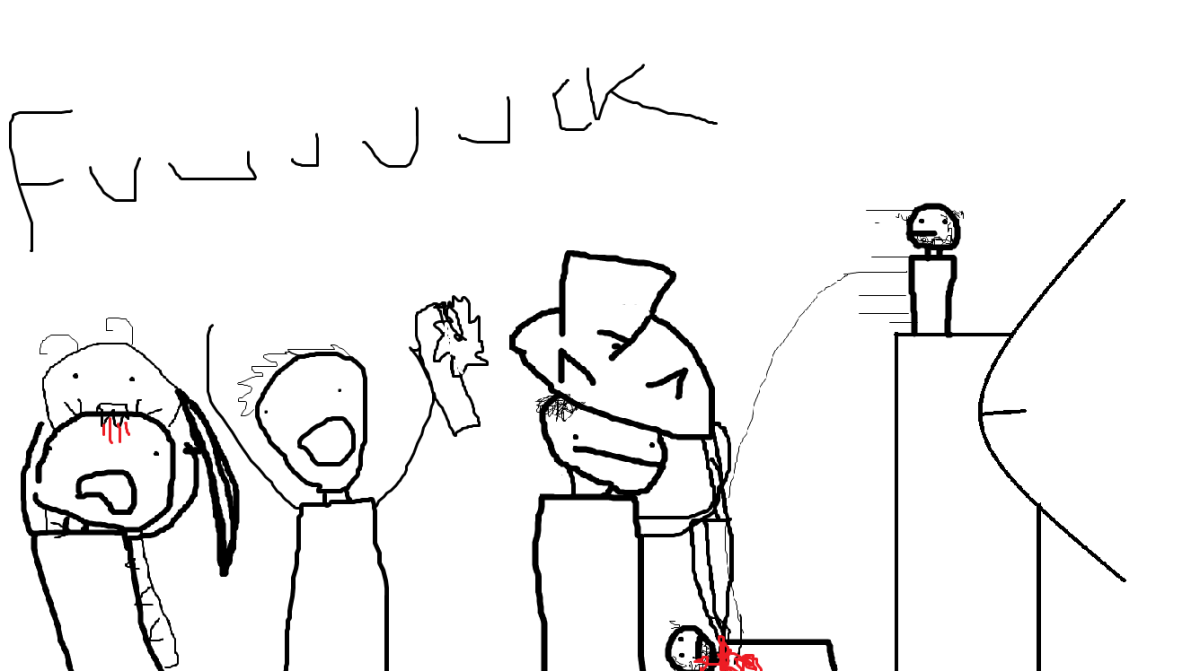
The vision of the crashing ship has been flashing in the back of their minds every few seconds now, and they could feel the thing going down. Screw this, thinks Baztak, as he activates a teleport cypher, landing him at the top of the stairs. Arms follows too, scooping up the body of their fallen adversary on the way, with Django behind him. They rush down the stairs, hoping that the centicreature isn't following them, while knowing that it almost certainly has.

Baztak makes the pole first, climbing down it at speed and dropping to a rooftop. The ship was now above a city! Arms gets there next, chucks the body down, then starts climbing down the pole, which is now leaning as the ship starts to tilt. Django is last, and he has no time at all, sliding down the pole to land near Arms mere seconds before it catches on the next building, crashing through it, and the invisible ship falls just over a hundred feet away from them, with a groaning powerful thud.

Buildings are destroyed, and the streets are full of chaos. Still, no one can see the ship, merely the damage and destruction beneath it. Baztak takes what he feels might be handy from the dead man's corpse, planning to study it later. He activates a cube shaped cypher, causing himself to become invisible for a few minutes, so that no one will see him near the body of the man at such an inopportune time.
It takes little time for him to find the others, and they quickly realise that they are in Ishlav.
Ishlav. The entire city was destroyed twenty years ago, though all organic matter was spared. Now they were responsible for a new disaster. They head off to find an inn run by an old friend of Baztak's, so that they can rest, recuperate, and prepare for what might lie ahead.
----
Thanks for reading! This was a lot longer than I'd intended, but I wanted to try and fit as much of what happened in as possible, since so much of it was a blast to play. Images were drawn by Arm's player whilst playing. While they're not a completely accurate depiction, I think it adds to the story.
